Saturday, December 11, 2010

Christmas Contenders: starting a list and looking for suggestions

This is the first year I’ve been wondering, well in advance, what I’ll wear during Christmas. Normally, I just wear whatever I want, depending on what I’m doing that day, or thinking about who I’ll be around. This year, I’m traveling to North Carolina to visit family so I’m planning in advance what I’ll wear and bring a few decants with me. I’ll be around my Mother, who pretty much hates perfume, or anything strong or what she calls “chemically perfume-y.” Yeah, I know, this means I can’t even consider bringing about 75% of my collection to NC (not that I’d bring the whole collection, I just mean this greatly reduces my choices to begin with).

So, I’m thinking about ‘comfort fragrances’ similar to comfort food. I’m thinking of scents that actually smell like Christmas to me (although I can’t bring Angel because Mom would suffocate, unless of course a few drops of Angel in pure parfum wouldn't shock her, since the parfum has much less sillage...hmmmm...or maybe the Liqueur version or Angel Violet). I’m aiming to bring 3-4 decants, I’ll be in NC for 7 days, and 3-4 should hold me.

Here’s what I’m thinking:

Jo Malone Pomegranate Noir: This is a lovely scent, utterly unisex, and it smells like Christmas. It’s somewhat soft and sheer yet I can smell it on myself all day. For a Jo Malone, the longevity is pretty darn good. It’s spicy and non-foodie yet it simply smells like Christmas. The Jo Malone websites lists the notes as: sweet fruity notes of raspberry, plum, pink pepper and pomegranate with patchouli, frankincense and spicy woods. You know, I don’t think this smells fruity at all. What I smell is the frankincense and spicy woods, and maybe a tart fruit, like what I imagine pomegranate to smell like, but it isn’t sweet and I don’t even get patchouli from this. I swear I smell balsam fir trees, a crackling fire, some nutmeg and maybe even a smidgen of snow and sparkling candle light.

DSH Mahjoun: Serge Lutens might think he holds court over the “loukhoum” type fragrances but my favorite is Keiko Mecheri Loukhoum. By a mile. DSH Mahjoun is another oriental which is said to focus on this Moroccan dessert but it’s nowhere near as sweet as the SL or the KM and, in truth, it’s much nuttier and more oriental than both. Let's just say there's no almond or cherry in sight. Mahjoun is a nutty, woody, slightly sweet oriental gourmand with dashes of cinnamon, nutmeg and what I can’t describe other than date-nut bread. Mahjoun is a crowd pleaser (thinking of Mom) but it also pleases me.

Ava Luxe Madeline: This is new, just arriving a couple days ago. Madeline is, I believe, Ava Luxe’s Christmas scent for 2010. Madeline is also similar to DSH Mahjoun in that it’s a gourmand but it isn’t as sweet as most. It is sweeter than Mahjoun, however, as it smells like spicy, creamy eggnog. The gourmand quality doesn’t go over the top because it has a blast of nutmeg keeping the sweetness in check. It’s delectable.

The Different Company Oriental Lounge: An essentially basic oriental, with both gourmand leanings and entirely non gourmand leanings (curry leaf). TDC Oriental Lounge has been a favorite of mine since I purchased it last year. It sometimes seems so basic in structure yet I find myself smelling it over and over again all day enjoying the off-beat twists that daughter-Ellena chose to include. TDC Oriental Lounge is again, a crowd pleaser (couldn’t possibly be called “perfumey”) yet it also pleases me.

Do you have any suggestions I might not have thought of? Of course, I can bring more than 4…(hee hee you know how it is!).

Oh, and PS: I'll have Teo Cabanel Alahine with me, because she's my closest friend, sort of like Oprah and Gail King; Alahine is always with me.

Photo is of the Biltmore Estate in Asheville, NC. I think we're attending a Christmas Eve event there.

Friday, December 10, 2010

The Whole World is Mothers and Daughters: Estee Lauder Private Collection (Review and Bottle Giveaway)


Private Collection is one of my favorite fragrances, yet I've resisted reviewing it until now. Like Estee, I guess I've wanted to keep it a secret. I'm not sure why I've been hesitant to talk about it, unless I just want it to stay in some magical, imaginative domain, some fantasy realm where only I know about it, as if it were made expressly for me. It's as if Private Collection and I are dating: I'm the geek, and Private Collection is very popular, and if I bring our relationship out in the open, no one will believe me, and it will be clear that it was all in my head: Private Collection belongs not to silly insignificant me but to much more important people in the world.

High school analogies are inevitable when it comes to this one, because I have such strong memories of my teenage sister wearing it. Remarkably, I've maintained a pretty fierce devotion to many if not all the fragrances she wore when we were growing up. I remember Coco, Bill Blass, Lauren, Albert Nipon, Anais Anais. As far as I can recall, my sister wore one at a time. We didn't have a lot of money--we were quintessentially lower middle income, Middle America--and when I look back I can't picture more than one bottle out on her dresser. She didn't have a collection. She emptied each bottle before moving on to the next, which probably went a long way toward building my own attachment to them.

For months she would smell exclusively, and strongly, of a single charismatic fragrance. Like a song you hear over and over, each fragrance became a sort of soundtrack to our childhood. I smell them now and, while I can't construct a chronological time line, I move directly back into the heightened emotional landscape of that period. Impressions flood back in. I remember the way the light came through my sister's bedroom curtains. I remember the feeling I got from that. I remember the painted treatment of her dresser; the way her room looked behind me as I viewed myself in her mirror, wondering what it was like to be her, or, at the very least, not to be me. I remember the feel of the textured green carpet in the hall outside our rooms, the way it rubbed on my feet. It was comforting, like being in your pajamas.

My sister wore a lot of Estee Lauder, so the soundtrack is pretty heavy on that specific, instantly recognizable instrumentation. Estee Lauder connected mother to daughter. It reinforced a cohesion in the home. Recently, an almost satirically snotty commenter referred to me as being "geographically marginalized," because, I suppose, as a blogger, when I want to contact a perfumer, whether to interview him or befriend him or, say, sleep with him, I must negotiate it all online, as if, by not living in France, I am out of some essential loop. It's a joke, of course, because at this point, no one is geographically marginalized. Ask Facebook. There's probably a perfumer or two waiting in your suggested friends box. There is no center. The world is full of centers. There is no "there" there anymore, as another saying goes.

Back when I was a kid, to be American was truly to be stuck in your own skin, in your own pocket of experience. A term like "geographically marginalized" would have meant something then. Corporations understand this as well. Estee Lauder achieved something back then that very few companies can any more. She was ubiquitous. It was a name and a brand that signified very specific things. Very American things. America was a conglomerate of remote, far flung outposts. You were alone in your experience and the world was way, way out there, somewhere past the shag carpeting of your suburban hallway--but others, way, way out there, were using Estee Lauder too. The name was everywhere. It was on TV, at the store, in magazines, on your mother's lips. Estee Lauder was a kind of American mother figure herself, and her brand reinforced an idea that all these geographically marginalized satellite points were connected, even if you couldn't prove it yourself or see exactly how. You trusted her on that.

You saw the Lauder name in your mother's medicine cabinet. In the family bathroom. In the make-up bags your sisters and mothers used. It was a reassurance of some kind. I wasn't attracted to women sexually but I was fascinated by them. They seemed connected in ways guys weren't. They seemed to understand those distances separating everyone and every thing. There was a combustible bond there between women which I thought must be unique to the gender. Estee Lauder seemed in on this conspiracy of connection. It was a secret code, a part of that language. You'd go to the mall and women were clustered around the Lauder counter. It was always the hub. It was hard to believe they were just talking about foundation and lipstick. The way they were huddled, their excited speech, indicated some sort of strategizing must be taking place, as if, across the country, they were all plotting their escape. I wanted them to take me with them.

My mother tells a story about me which makes a lot of sense when I consider it in this context. Apparently, I roamed away from her at the mall once. I couldn't have been older than five. She looked all over for me. She had security searching too. Finally, the sound of female giggling and chatter. As it turns out, I'd crawled into a glass-fronted display counter. They found me because a crowd of women had gathered around to watch. I was wearing a bra as a hat. I was putting on some kind of show. Maybe I wanted to be at the counter because that's where they all seemed to want to be. Obviously, I wanted to be part of that conversation. Now that I'm older, I understand that what they were talking about was less important than the basic fact that they were talking, which is kind of why I talk too, probably.

My mother or grandmothers wore Youth Dew and Estee. My sister went through Beautiful, White Linen, Cinnabar, Knowing, Tuscany, and, most memorably, Private Collection. I don't remember picking up most of her bottles. But I can say that, picking up my own bottle of Private Collection several years ago, I had an amazing sense of deja vu when I felt the thing in my hand. The glass has a specific feel to it. Your fingers make a unique sound whistling along the glass, a hushed but emphatic kind of thing. Of all the perfumes my sister wore, Private Collection had the most gravitas. It was formal in an outdoorsy way. It felt a little like Christmas, with its evergreen aroma and the kind of emotional intensity one finds centered a lot around the holidays.

My sister was popular but intense. I still don't know what was going through her head during those years. I still wonder. She was very pretty, gorgeous really. She was feminine, but like many of the women in my family she was also very headstrong in a way which indicated deeper reserves of masculinity. Private Collection shares a certain feeling of athleticism with another favorite my sister wore, Clinique Wrappings. It's that flushed sensation of someone coming in after a brisk run in the cold. There are florals in the mix (specifically, orange blossom, linden, jasmine, chrysanthemum, rose) but I never really notice them until I force myself to. Private Collection feels like a cold air fragrance to me. It feels like the outdoors brought indoors, like frost on the windowpanes. There's a brilliance to it, a sun on snow kind of quality. Its slightly powdery feel only adds to the wintry impression.

I don't know when it was created. It was released in 1973. Company legend has it that Mama Estee reserved it for her own use, before being convinced to pass it onto her daughters out in the world. I think another reason I've resisted sharing Private Collection publicly is the fact that so many react in visceral contempt for the brand and its fragrances, almost the way we grumble at the suggestion we've grown up to resemble our own mothers. We want to enforce a sense of separation there, maybe. How many times have you seen a mother protest when her daughter doesn't apply lipstick before a photograph? How many times does the daughter rebel? Maybe it's something like that. Estee is mom and mom tells you what to do. To love her is to mind her, and maybe it's impossible to appreciate our mothers objectively. Whatever the reason, I've chosen to avoid soliciting unfavorable scrutiny about Private Collection particularly. I want to protect it from that rejection, I guess.

I have a bottle to give away--but I should be clear: this is Eau de Private Collection. I'm not sure what the difference is. It's lighter, to be sure. It lacks some of the powder. And I believe it lacks oakmoss and some of the heavier players which make the base of Private Collection proper so durable and persuasive. However, it's very similar; i.e. wonderful. The bottle is 1.7 ounces. To be eligible, you must have commented on this site before. Drawing will be conducted Monday. Conducting these giveaways, I realize, is a way for me to get back into the glass fronted counter. See you there.

Thursday, December 9, 2010

Scents I've Reconsidered: Shocking!, Krizia Krazy, CDG Red Series Carnation


Something happened this year. This Fall. Is it because the Summer was so extreme? I could barely smell anything the last four or five months. Spring shot past without registering, plunging us into one of the hottest Summers on record. In that heat, it wasn't just that my skin ate up perfume. My nose didn't seem to be functioning properly, either. I was like the squirrel who thinks the sky is falling in. I forgot, I guess, that seasons pass. I'd started to think it would always be that way. I'd just never be able to smell much again.

So Fall has been a real bargain for me. I always rediscover scents I'd forgotten about when October rolls back around. But I rarely reassess them so drastically. I'm looking at and smelling things in an entirely different way. Logic would dictate that only lighter fragrances reinvent themselves in cooler weather: the cold prolongs their effects, for one. But I'm finding that even heavier scents seem like different beasts to me.

Shocking! de Schiaparelli

The other day, I sprayed on some Shocking! by Schiaparelli, and I was astonished at how deeply I'd previously misapprehended it. I've always loved it, but many of its subtleties were lost on me. I could smell clove, honey, and rose, the polar points of the fragrance. I didn't think of Shocking! as anything remotely close to subtle. The name wasn't at all ironic to me, despite the exclamation point. All I got was the bombast.

This time, I could smell the imaginary places in between, the intricate tensions created by such bold juxtapositions. The tarragon up top was more discernible. I could discern between the tarragon and everything else going on in the opening. And I appreciated the slow, inexorable descent into patchouli, civet, and labdanum, as well as the influence of , I think, vanilla. I'd always thought of Shocking! as a heavy tank of a scent (a good thing, in my opinion) but smelling all these things at play I've seen more clearly how the scent fits into the Schiaparelli sensibility; like a giant lobster on an elegant evening gown, yes, it's somewhat jolting. But the gown is definitely there to give the kitsch emphasis and contrast, taking it into irony.

My bottle is probably from the seventies, possibly the eighties. The ingredients list only parfum, alcohol, and aqua. Shocking was created in 1937 by Jean Carles, the nose behind tweedy green fantasia Ma Griffe and--more tellingly, in this context--Tabu. I have no idea what Tabu once smelled like. I imagine it possessed a lot more of Shocking!'s subtleties.

Krazy de Krizia

I've owned it for well over a year. So I had it last winter, as well. You would think I'd be more than a little familiar with its range. To me, it was merely an Obsession clone. It came out in 91, five or six years after the cultural landmark which was Obsession. That fragrance has changed significantly over the past five to ten years. Obsession is still Obsession, but more piquant up top, more shrill overall, and much thinned out toward the bottom.

I assumed, smelling Krazy, that Krazy gave a more accurate indication of what Obsession once was. What I see this winter is that Krazy, though it speaks the same language, has a slightly different inflection and is much softer at the punctuation points. Krazy is hard to find now, but I've been fortunate enough to find two bottles: one in edp, the other edt.

Several things strike me as being significant differences between Obsession and Krazy. Krazy's pyramid includes Lily-of-the-valley and aldehydes. I believe the Lily-of-the-valley must give it that dulcet quality which sets it notably apart from Obsession when you really get down to it, providing a note of weird, unexpected dissonance, a muted counterpoint. The aldehydes give Krazy a quality of amplification as well. It was interesting to rediscover Krazy lately, because the perfumer behind it, Dominique Ropion, is much discussed these days for what I suspect is a far less interesting or compelling fragrance, Portrait of a Lady.

Carnation by Commes des Garçons Red Series

This one disappointed me when I smelled it a few years ago. I bought it, then returned it, having smelled it all day on my hand. Too subtle, I decided, or something to that effect. It's hard to remember what I was thinking at this point because I like it very much now, and smell it wafting up from my skin for quite some time after application. On the reviews sites, Carnation is criticized for the candied red hots quality people say it has. Too much clove. Not enough persistence. Where's the rose?

I do smell the rose now, where I didn't before. Yes, it is submerged under a rather formidable clove and cinnamon one-two punch. You still feel their impact, but rose softens the blow. Jasmine is listed in the pyramid but I'm still not getting that, however enlightened of late I am. What I'm getting now and missed before is an update of a classic carnation soliflore: rather than the dainty budoir carnation of old, this one radiates with a modern kind of warmth and assertiveness. It feels both friendly and fearsome; there's the slightest bit of edge there.

Tuesday, December 7, 2010

Womanity, Shmoomanity

Hearing and reading about Womanity is one thing. Smelling it inevitably begs the age-old question: "What's in a name?"

As has been pointed out recently on this site, I'm geographically marginalized (not New York, not Paris, not Milan; just plain old, garden variety, nothing special, no big deal middle America) so it wasn't until a few weeks ago that the fragrance showed up locally and I could get my hands on it. Had I known how much I'd like it, I might have been a lot more anxious than I was. Beforehand, waiting anxiously for something called Womanity seemed like something a fat-faced character in a Sunday comic might do, with cartoon steam coming out his ears and a burned out light bulb over his head.

Much has been made of Mugler's branding strategy for Womanity--the website, the ads, the attempts at grassroots buzz on a corporate-sized budget. I won't rehash any of that, but I do think it's interesting that a fragrance so downright masculine, if not simply quintessentially unisex, would be marketed this way, with such a relentlessly specific focus. Fine, maybe Womanity's tangy start is a hard sell as a greasy mechanic's after shave. I wouldn't go that far. But the idea Mugler is advancing with the fragrance seems quaintly outdated in a culture where emphatic gender distinctions are increasingly, even routinely, blurred, and Womanity, after all, is hardly your average fruity floral. Besides which, mechanics and truck drivers, much maligned in reviews of Kouros and its ilk, have much better taste than they're typically given credit for.

Womanity is salty, yes. You might have heard that. Some woody facets, although finer points like facets aren't exactly useful concepts in a Mugler fragrance. It has a fig thing happening. I'd heard it was quiet, if not exactly sheer or a skin scent. I don't find that to be true at all, and my skin usually chews fragrance up and spits it out. Katie Puckrik, reviewing the fragrance on her site, gave me the first indication, prior to smelling for myself, that Womanity might have some presence; maybe even a lot. If memory serves, she also talked about its suitability as a unisex scent. I'd heard a lot about the salty sweet duality of the fragrance, but for the most part the things I read made Womanity sound fairly derivative, a sell-out gambit on the part of the Mugler brand for suburban mall ubiquity. I.E. Ho Hum, nothing special, etc.

Womanity is the furthest thing from average, and a far cry from faint. If this is a gambit for culture wide ubiquity, then someone might want to clean out the pipe the folks at Mugler are smoking. Somebody left some wacky tobacky residue in there. The stuff lasts forever, for one thing. I can smell it on me all day. Hands down, it is the closest to niche you will find, short of Angel, at the mall counter. Frankly, I find it more interesting, more audacious, playful, and satisfying than a great deal of so-called niche fragrances as well. It has personality and a sense of humor--and not entirely inadvertently. Yes, in terms of the packaging and sales pitch, the joke is on Mugler. All the same, have no doubt: Mugler is laughing WITH you, too. You need only look back to the fashions the man behind the name created in the nineties to see the intended irony involved.

I've made no secret of my love for Angel and Alien. It's logical to use those two as bookend barometers when judging Womanity on various levels--strength, oddity factor, persistence, diffusion. It's also a little misleading. For the most part, what Womanity shares with its sisters is a sensibility. Smelling these three on a crowded shelf, I might not link them together, but learning they're connected would make perfect, instant sense to me. They're definitely engaged in a conversation. Womanity is no Mitsouko, but neither is Angel, and I'm not sure either are too busy trying to be.

Womanity is bold, unusual, and polarizing. I'm a fan of everything but the name.

Sunday, December 5, 2010

Autumn 2010: Five favorites I've been wearing again and again

I’m not entirely sure what motivates me to write these seasonal favorites posts. Maybe its part diary. I know I’ll be interested five years from now in what I wore way back in 2010 (so perhaps this is a little selfish). Maybe it’s partly that I think I might choose scents that you haven’t tried and might be worthy of your sniffing time. But as I said, I’m not sure why I write these posts, but I do feel compelled. Oddly.

Here are the five perfumes I’ve been wearing the most often and completely enjoying each and every time:

Dawn Spencer Hurwitz Parfum de Luxe: This is a subtle yet true chypre. The fragrance it most reminds me of is Chanel 31 Rue Cambon. Parfum de Luxe is complex and multi-facted, following the beautiful curves along the chypre corridor. It begins with the usual bergamot, citrus opening, evolving through layers of dry florals and rests upon a gorgeous bed of oakmoss, labdanum and sandalwood. The ingredients smell high quality and while it isn’t a “natural” (as in 100% all natural no synthetics) it smells very natural and pure.

Parfum de Luxe notes: bergamot, clary sage, neroli, petit grain and violet. Heart: Bulgarian rose, Centifolia rose, Chinese geranium, honey, iris, tuberose and ylang-ylang. Base: amber, benzoin, oakmoss, labdanum, patchouli, sandalwood, tobacco and vanilla.

Solange Cosmic: This is another I’d classify as a modern chypre, without even smirking or mocking at the “modern chypre” category (which I oftentimes do). Let me immediately get this out of the way; I was initially turned off by the Solange line entirely. It all seemed (past tense) so overpriced and focused on style over substance. The perfumer is Lyn Harris of Miller Harris and she was contracted by Solange Azagury-Partridge who is a London-based jewelry designer famous for her striking sculptural jewelry. There are two fragrances from Solange; Stoned and Cosmic, and each has a seemingly ridiculous addition to their formula, Stoned contains diamond particles and Cosmic contains ground meteorites. Well, Solange is a jewelry house, and everyone should be allowed her own shtick, so I cut them some slack and just gave in to the experience of these fragrances. Stoned is not my style, it is way too powdery, but Cosmic caught my attention, and now that I think about it, it is another in the list of “wasn’t love at first sniff but I grew to love it” category.

Cosmic probably also appeases my inner sci-fi geek. Check out Nathan’s photos for fantastic images of the bottle design.

So what does Cosmic smell like? It’s does not contain that oakmoss blast of classic chypres from days of yore, but it definitely has a mossy personality and an interesting layered development that follows the typical progression of a chypre fragrance. Cosmic starts off weirdly tangy; almost a sour top note over a mossy and powdery base. I’ll be honest; the start might be a little off putting. It’s tangy yet sweet and it’s also mossy and has strong hints of sweet suede-y leather. But if you aren’t gagging right at the gate and you like modern chypres this one is worth trying a few times and definitely waiting for the dry down. It’s a little powdery, but I've found it to be an unusually addictive scent, for those who aren’t put off by the description “sweet, tangy, mossy yet powdery modern chypre.”

Oh, and you also need to know it’s expensive. Cosmic is $285 for a bottle, but for me, I find the kitschy bottle design endearing and I grew to crave the scent.

Cosmic notes: Bergamot, Galbanum, Rose, Jasmine Absolute, Iris Absolute, Patchouli, Vetiver, Labdanum, Opoponax, Myrrh, Vanilla

Teo Cabanel Alahine: I know. You are rolling your eyes. You are a teensy bit tired of my Alahine obsession. But it’s my holy grail, and to tell you that I haven’t been wearing it tons and tons over the past two months would be a lie. Alahine is genius in autumn and winter. This stuff is quite simply, incomparable. Through conversations with Brian, I think I’m coming to understand the role ylang ylang plays in Alahine which might be precisely the reason I am crazy about it. Alahine’s notes read like a floral oriental but it veers more toward ambery oriental for me, with much more focus on dry non-sweet amber, labdanum, iris and benzoin than the roses and jasmine that are mentioned. But there is this molten lava-like vein of ylang ylang throughout, that reminds me a touch of Opium, which I find mesmerizing (thanks Brian for helping me make this connection!). I love Opium but can’t wear it. It feels dated on me and perhaps it’s just Too Much, too many poppin’ aldehydes. I’m coming to think of Alahine as my modern Opium.

Alahine notes: bergamot, ylang ylang, Bulgarian rose, Moroccan orange tree, jasmine, pepper plant, iris concrete, cistus, patchouli, benzoin, vanilla, musk

The Different Company de Bachmakov: I have a love/hate relationship with TDC. There are several fragrances I think are fantastic, while there are also several fragrances I think are generic, too fleeting and generally overrated. I love Sublime Balkis and Oriental Lounge. But I adore de Bachmakov. Now, my adoration has lots to do with my enjoyment of the smell of tea and dry spices. If you are the same, and have a fixation on tea and dry spices, de Bachmakov is a beauty. I’m getting a little lazy, so I’ll point you to a review by Robin at NST, which I totally agree with and couldn't have written better myself.

de Bachmakov notes: bergamot, shiso leaves, coriander leaves, freesia, jasmine, nutmeg, cedar and craie douce

Thierry Mugler Garden of Stars Angel Violet: Ok, now you are really rolling your eyes. You’ve lost respect for me. Here’s the skinny, when people say that original Angel is so sweet and so ultimately gourmand it kind of doesn’t register with me. Original Angel, on me, is an unusual oriental, but what I smell are spices and pine needles and clean sweet patchouli. I really don’t get the candy and fruits that others find in original Angel. But Angel Violet, now THIS is a gourmand version of Angel. It is quite simply a candied violet accord infused into original Angel, it’s fairly funky, because if I close my eyes and envisions colors, it’s both purple and green and a little brown. It’s sweet and woody with no florals in sight. Angel Violet is also less potent than original Angel; it’s strong for a few hours but does not last all day and doesn’t project nearly as much. If you like the occasional candied violet scent and also like original Angel, this is delightful.

So, what's been rocking your world this season?

Thursday, December 2, 2010

Niki de Saint Phalle: Review and Bottle Giveaway


It's easy enough to smell Niki de Saint Phalle's perfume without thinking of the woman behind it; easier, no doubt, than trying to wear No.5 without thinking of Coco Chanel. Taken at face value, de Saint Phalle is a grassy green chypre, falling somewhere between Givenchy III, YSL Y, and Jean-Louis Scherrer. It lands on the dry side, and feels far more herbal than its peers. It's the youngest of that group as well. You can talk about the fragrance, even about how challenging it can be, without knowing anything about its namesake. But there's a reason it's been a cult favorite since its release in 1982, and much of that has to do with the way it successfully embodies the contradictions, conflicts and quirkiness of the woman behind it, an individual just as fascinating as Coco Chanel.

Her father was French; her mother American. She was born in France but raised primarily in the United States. Until the stock market crash, the family had been wealthy. She began her career as a fashion model, but had been painting as early as her teens, when she was kicked out of school for painting the building's trademark iron fig leaves bright red. She married her childhood friend, composer-then-writer Harry Mathews. They'd met when she was thirteen. He was fourteen. Along with poets James Schuyler, Kenneth Koch, and John Ashberry, Mathews founded the literary journal Locus Solus. It didn't last long, but was to many writers, apparently, what the Velvet Underground has been to musicians. It certainly brought a steady stream of literary and artistic figures, many of them pop, experimental, and/or Avant-garde, into the young couple's life.

In a 2008 interview about the ten years he spent living with Niki, Mathews said that their attraction to each other had a lot to do with similar backgrounds. Both came from "genteel, moderately well-to-do families who subscribed...to the tenets of upper-class New York WASP society." Both were "artistically inclined, oversensitive, overtly rebellious romantics." Niki was modeling for Vogue and Elle magazines, but was troubled mentally, "devising one ingenious method of suicide after another." Ultimately, she suffered a nervous breakdown. She was institutionalized and underwent shock treatment. It was barbarous, according to Mathews, but it helped her. She started making collages around that time out of stones, twigs and other items she found on the grounds around the clinic. She also resumed painting. As she gave up modeling and her acting studies to become an artist, Mathews abandoned music for writing. There were rumors about Mathews, allegations he was involved with the CIA. Later, he wrote a book which simultaneously denied and confirmed the idea.

I remember seeing a lot of Niki's work as a child, but I can't think where I might have run into it. The point is, her painting and sculptures have a distinctive look, instantly recognizable, a look she would later incorporate into the fragrance's packaging and sensibility. Her exposure to the work of Antoni Gaudi, specifically his broken tile mosaic park benches and sculptures in Barcelona's Parque Guell, was crucial to her artistic development. Unlike Gaudi's sculptures, her work tended to make more use of found objects, and she didn't often fit them together following the symmetrical logic he did (He didn't always follow symmetrical logic either, judging by the dripping, trippy facades of La Sagrada Familia Cathedral, also in Barcelona). Later, she would admire the work of artists such as Paul Klee, Matisse, Picasso, Jasper Johns, de Kooning, and Rauschenberg, all of whose influence could be felt in some way or another in her own evolving sensibility. At the same time, her work is completely individual in its overall effect.

She eventually moved on to large scale sculptures of women, part Botero, part Sunday comic strip; these were massive, doughy iron figures painted in bright, bold colors and geometrically patterned shapes. In 1978, after another serious illness, she laid the foundation for The Tarot Garden, a sculptural installation celebrating female creativity and strength, peopled by her figures. The installation became the focus of her life, and she spent the next ten years creating this garden. Her long term dedication to the project made it clear that Gaudi had been not just an artistic influence but a kindred soul as well; like her, Gaudi spent years constructing Parque Guell and the Sagrada Familia cathedral. As with de Saint Phalle, his sanity and health were sometimes compromised, if not always dictated, by the efforts these passionate commitments required.
It was to help fund the Garden that de Saint Phalle created her fragrance several years later. The notes are listed as follows: artemisia, mint, peach, bergamot, carnation, patchouli, orris, jasmine, ylang-ylang, cedar, rose, leather, sandalwood, amber, musk, and oakmoss. People have discussed Niki de Saint Phalle as an early example of the celebrity (in this case a well-known artist) fragrance. I think of this particular perfume more as performance art, a way of taking an artistic sensibility into the headspace of others; another sort of art installation. Many people talk about the patchouli, too, though I've never been particularly conscious of it. More than anything, I smell soft peach, artemisia, oakmoss, and an usually employed ylang ylang. Niki de Saint Phalle smells more old fashioned to me than other green chypres I love. There's a melancholy to it that I've never smelled in those, as well. I'm sure many regard this more simply as a floral chypre, but it's always struck me as a quintessential grassy green chypre, though, again, there's nothing exactly like it.

It's closest to Bandit, I think, in many ways. It has that ashen smokiness to it. Unlike Bandit, where the presiding feeling is more mercenary, Niki de Saint Phalle is smoky in a far more subdued way, like the memory of smoke lingering on someone's clothes, or the aroma left on furniture once the smoker has left the room. That probably contributes to the forlorn quality for me. Though strong, de Saint Phalle feels soft and muted. Smelling Bandit, I sense perfumer Germaine Cellier's daring audacity, as if the perfume were an assault on the silliness of polite society; unexpected, strange, and remorseless. Saint Phalle is filled with a sense of regret--of people gone and things you can't change or get back. It reflects a mind which views things uniquely but at a price. It's a lot subtler.

Knowing more about Niki's past, I see the bottle's design in a new way. How interesting that it features a painted snake intertwined with its unpainted metallic twin. That iconic sculptural detail now reminds me of her attempts to integrate color and art into her life and the lives of others, and the challenges involved, mainly in the form of institutionalized resistance and mental duress. I love the story of Niki painting the uncolored iron fig leaves of her school, an artistic vandalism which strikes me as a more playful version of Cellier's bolder anarchic streak. The fig leaves, painted and unpainted, grew together and became snakes for the bottle's cap, a symbol of tenuous unity, precariously balanced tensions.

I have two bottles of Niki de Saint Phalle. I'm giving one away. This one ounce bottle of edt concentration is from the eighties. It is boxed but unwrapped. The bottle is full and has only been sprayed three times; once for this review. I'll draw a name from the comments on Monday. To be eligible, you must have commented on our blog before. Please leave your comment here to be considered.


Wednesday, December 1, 2010

Frederic Malle Portrait of a Lady

Henry James, Isabel Archer, blah, blah, blah. Portrait of a Lady is an Oriental Rose perfume. There is nothing Victorian about Portrait of a Lady, in fact, I don’t think it’s particularly ladylike. I put the word “Oriental” before “Rose” for a reason. This is a dark, brooding, Gothic woman behind veils; with kohl lined eyes making you feel a little pale. This is not another version of FM Une Rose. This is an oriental perfume extraordinaire.

Portrait of a Lady is the release I waited for most impatiently this year. I am an enormous Dominique Ropion fangirl. I am also a huge fan of the Frederic Malle line. Perhaps it is because I had such high expectations, (let’s call it PoaL for brevity’s sake), that I’m feeling a bit underwhelmed. Well, not underwhelmed really, but I don’t think PoaL wears as it should on me. There’s something in the base that bothers me. I think its ambroxan, but I don’t know enough about aroma chemicals to be sure; but there is something in PoaL that derails it from it being an absolute to-die-for fragrance for me. I so wanted to adore PoaL to distraction. The thing is, maybe I will, in time, grow to love PoaL more. This happened to me with Teo Cabanel Alahine. Honestly, I didn’t think so much of Alahine my first few wearings, but over the course of a few months Alahine grabbed hold of me like a boa constrictor and I’ve never been able to extricate myself from her charms; she became my holy grail, but oddly, it wasn’t love at first sniff. So there’s hope for me and PoaL I guess.

Portrait of a Lady is a beautiful oriental fragrance. You might think “oh, we all need a new spicy rose like we need a hole in the head” but PoaL is unique. Sure, there is a touch of similarly with Sisley Soir de Lune, another spicy rose created by Ropion. Etat Libre d’Orage makes a fantastic spicy rose called Rossy de Palma, which in some respects, reminds me a bit of PoaL. But most other spicy rose scents are simply “rosier” while PoaL seems to focus much more on the oriental aspect.

Certain spices stand out for me, such as cinnamon and clove. I actually find the clove “numbing.” If I huff too closely, I get a Novocain sensation in my mouth. The rose accord is beautiful, these are deep, dark, lush roses, with touches of berries, though I can’t say I experience the raspberry quality as strongly as others have mentioned. I can tell you that some rose fragrances exhibit a sharp and citrusy personality and there is no such lightness here, PoaL is a dark and potent oriental rose. Others have suggested an “oudh-like” quality, which, thankfully, I don’t experience, because I pretty much despise oud.

What I do love about PoaL, and this is mostly why I adore Ropion in general, is that it’s a voluptuous perfume. It is sexy, dark, and exotic with excellent sillage. Ropion’s best perfumes remain voluptuous while so many other perfumers have gone the anorexic route. Portrait of a Lady is said to focus on rose and patchouli, and while both notes are obviously present, what PoaL billows around me is this gorgeous oriental spice accord. This is a perfume that a person who doesn’t even like rose or patchouli could love. And it’s also possible that I’ll grow to love PoaL more and more over time. In fact, writing this review is making me cherish it a bit more.

Listed notes: Turkish roses, raspberry, cassis, clove, ambroxan, benzoin, cinnamon, sandalwood patchouli, musk and frankincense.

Here Today, Gone with Sorrow


During the late eighties and early nineties, I lived in the East Village. It was something of an electrified ghost town at the time. Many of the artists, writers, and creative personalities I'd admired from my geographically marginalized upbringing in the practically rural Midwest had died, but their presence was still felt, and you could see their influence still, very distinctly, not just in those who remained to talk about them but in the art being produced and its effect on its witnesses.

People were angry and energized. It was a uniquely combustible time: people I knew were eager to do good, strong work, passionate not just for a circle of lights around their name but a glow which might illuminate the memories of those they missed.

Today is World Aids Day. I don't have much to say about perfume. I suppose I could link the lingering auras of these people to the psycho-emotional properties of fragrance, its strange ability to bring the dead back to life in some way. Those things have consoled me when I think of my grandmother, certainly. But my grandmother died of old age. She lived a full life. She was allowed a broad range of perspective, room for reflection forward and backward. World Aids Day commemorates a different kind of departure, and such connections seem rather facile in this context.

Nothing will bring these people back, obviously, not even words, but I'd like to open the comments today to hear about those who might have influenced you, personally or through their work, people who made a difference in your life and outlook, and have been lost to this epidemic.

Failing that, perhaps you can take from this post some kind of encouragement to appreciate those closest to you. They could easily be gone tomorrow.

Tuesday, November 30, 2010

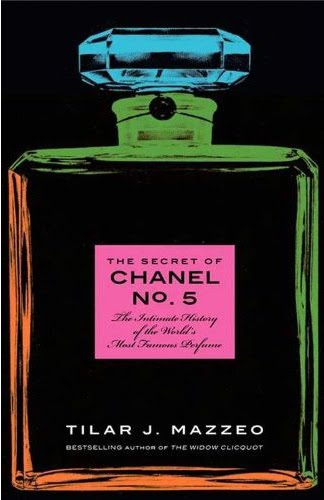
Monstre: Chanel No.5 as Celebrity Bio


There are many things to like in The Secret of Chanel No.5: The Intimate History of the World's Most Famous Perfume. Biographer Tilar J. Mazzeo treats the perfume as a significant piece of cultural history, focusing not just on the iconic design of its bottle and packaging or the astonishing longevity of its status as a bestselling fragrance but on some of its more ephemeral attributes and properties, many of which are more difficult to articulate, let alone determine. It's the first book of its kind, illustrating the power a fragrance has to contextualize its moment in time. Imagine the possibilities: perfume as social history, as personal memoir, as political thriller. An entire bookcase of such books, transforming the library into a perfume cabinet. No.5 is a good place to start, as its moment in time seems to be occurring in stop motion.

The book begins with a brief sketch of Chanel's childhood as an orphan. It moves from there to her involvement in the demimonde, experiences which mirrored the showgirl background of another, ultimately less fortunate turn of the century figure I admire, equally difficult but brilliant Jean Rhys. Like Rhys, whose most recent biography was named after her favorite perfume, Guerlain's L'Heure Bleue, Coco Chanel became a kept woman. She understood the rub--the ways in which affairs with married men were meant to work--but she was, again, like Rhys, as stubborn as she was passionate. She broke the rules by falling in love, causing heartbreak, loss, humiliation, and in some ways, self-sabotage. As with Rhys, the pattern of dependency and defiance repeated throughout her life, with less than glamorous results, whatever the fashions dressing it all up.

I found Mazzeo's account to be more engrossing once it moved onto Coco Chanel's development as a businesswoman. She was a far shrewder figure than Rhys, but in several ways equally foolish, signing away the majority of No.5's profits to business partners whose reach extended her own. The agreement assured the widespread success of her flagship fragrance but it was a decision she came to regret, and in fighting it, she betrayed her own best interests. This too reminded me of Rhys, whose lover, writer Ford Maddox Ford, helped get her published. Rhys came to resent his hold over her, though she depended on his largesse and influence--as did his wife. Coco's reputation and initial success seem to have been built through the same kind of extra-marital support Rhys alternately enjoyed and alienated. Chanel built herself from the ground up, judging by these accounts, a transformation as radical in opposites and contradictory impulses as the perfume she created in her image.

During the second world war, Chanel fought bitterly against the contract with her partners. The story of her anti-semitic behavior toward them is unflattering and fascinating. She was devious and hypocritical and seems to have refused any attempt at diplomacy. There was a childishness to much of Chanel's conduct during this time, an escalating desperation to maintain control of her image amid the extenuating circumstances of middle age and war. The inflexibility of her position was perfectly in keeping with the extremism of dictatorial Germany. Her own possible, if not probable, collaboration as what some characterize as a war criminal during this time, her affair with a Nazi, is detailed in the biography as well.

After the war, the No.5 contract was renegotiated. Coco willed it to be, by creating her own competing line of perfumes. She badmouthed the name and reputation of No.5, accusing it of inferior quality. Though manufacturing and distributing these newer, unaffiliated perfumes put her in breach of the original contract, her partners were left with no other choice but to meet her terms, much the way a married man must ultimately bend to the will of his mistress, lest he unleash the powers of anarchy she could exercise over his ordered little existence. In this way, the story of No.5 can be seen as an illustration of the collusion and conflicts between ego and id, creator and creation overlapping and co-existing with separate lives of their own, the one influencing the other, rearing its head to expose the mask of public respectability worn by its double. Coco's creation took on a life of its own, and she couldn't always, couldn't often, exert control over it with her own will. Throughout Mazzeo's book it's tempting to imagine Coco's figure dancing beyond the distorted glass of No.5's bottle, by turns trapped in and locked out of or behind her own creation and trying to get back in.

The book details the possible precursors to the fragrance within the industry. It discusses the career of Ernest Beaux, No.5's perfumer. These are fascinating details as well. The more technical story of the fragrance, dealing with its ingredients, its formulation, the influence of aldehydes, the cultivation of jasmine crops, particularly the espionage of smuggling jasmine absolute abroad during Nazi occupation: all are lucid and informative, and clearly related to the larger context of Coco's personality and life. The story is at its best when it has room to breathe. It feels a lot shorter than it wants to be, and in some respects resembles the respectful reformulation of a classic perfume: all the right things are there, in the right combination, but there's a certain lack of oomph in some way, a problem of proportion. At times, a feeling of depth is missing. That might be inevitable in such a short format. This history is a scant 200 pages--which isn't much space for the longest bestselling fragrance ever, let alone the woman who created it, living a number of lives herself in the process. It feels most rushed in the beginning, which is to say: this book-as-perfume's top notes seem a little thin. The middle sections, during the war and after, are more expansive, more substantive. You feel the pulse of various dynamic tensions, the Dickensian interplay of competing narratives which makes a story feel convincingly three dimensional.

It's difficult to determine what inspires the creative impulse. I don't know that Mazzeo's assertions are inaccurate. They're vividly imagined but lack the kind of detail needed for connective tissue. She makes an attempt to link No.5 in some mystical or Jungian way with Coco's orphanhood and formative affairs, to endow motifs of her childhood with talismanic properties. Without sufficient detail, these things seem like something viewed form a speeding car window. They don't resonate as they probably should or leave a proper impression. It's hard to conceive of them sticking with Coco, when they barely stick with you. I understand the urge to define what makes No.5 what it is. But I think that story is best left to the mind of the wearer and the reader. In long stretches of Mazzeo's book, one feels the panoply of weird, dissonant energies coursing through the perfume--that inexplicable alchemy. That's a remarkable achievement, operating as smell does in some strange way. It' an exciting read.

Notes From the Regionally Marginalized: On Satire


From good old Wikipedia, some thoughts on the misunderstandings wrought by the centuries-old practice of satire:

"Because satire often combines anger and humor it can be profoundly disturbing - because it is essentially ironic or sarcastic, it is often misunderstood. In an interview with Wikinews, Sean Mills, President of The Onion, said angry letters about their news parody always carried the same message. "It’s whatever affects that person," said Mills. "So it’s like, 'I love it when you make a joke about murder or rape, but if you talk about cancer, well my brother has cancer and that’s not funny to me.' Or someone else can say, 'Cancer’s hilarious, but don’t talk about rape because my cousin got raped.' Those are rather extreme examples, but if it affects somebody personally, they tend to be more sensitive about it.'
Common uncomprehending responses to satire include revulsion (accusations of poor taste, or that "it's just not funny" for instance), to the idea that the satirist actually does support the ideas, policies, or people he is attacking. For instance, at the time of its publication, many people misunderstood Swift’s purpose in "A Modest Proposal", assuming it to be a serious recommendation of economically motivated cannibalism. Again, some critics of Mark Twain see Huckleberry Finn as racist and offensive, missing the point that its author clearly intended it to be satire (racism being in fact only one of a number of Mark Twain's known concerns attacked in Huckleberry Finn). This same misconception was suffered by the main character of the 1960s British television comedy satire Till Death Us Do Part. The character of Alf Garnett (played by Warren Mitchell) was created to poke fun at the kind of narrow-minded, racist, little-Englander that Garnett represented. Instead, his character became a sort of anti-hero to people who actually agreed with his views.
The Australian satirical television comedy show The Chaser's War on Everything has suffered repeated attacks based on misconceived interpretations of the "target" of its attacks. The "Make a Realistic Wish Foundation" sketch (June 2009), which attacked in classical satiric fashion the heartlessness of people who are reluctant to donate to charities, was widely interpreted as an attack on the Make A Wish Foundation. Prime Minister of the time Kevin Rudd stated that The Chaser team "should hang their heads in shame". He went on to say that "I didn't see that but it's been described to me....But having a go at kids with a terminal illness is really beyond the pale, absolutely beyond the pale." Television station management suspended the show for two weeks and reduced the third season to eight episodes."
For further reading:

Dorothy Parker (for example: "She runs the gamut of emotions from A to B". See also: "If all the young ladies who attended the Yale prom were laid end to end, no one would be the least surprised." Can you imagine the letters Parker got for THAT from the letters of Yale alumni and...their wives?)

Gore Vidal (for example: "Andy Warhol is the only genius I've ever known with an IQ of 60." See also: "It is not enough to succeed. Others must fail." And: "Write something, even if it's just a suicide note.")

Stephen Colbert (for example: "Now we all know that Fidel Castro dressed up like Marilyn Monroe and gave JFK a case of syphilis so bad it eventually blew out the back of his head." See also his address to President Bush: "Look, folks, my point is that I don't believe this is a low point in this presidency. I believe it is just a lull before a comeback. I mean, it's like the movie Rocky. Alright?")

Trey Parker (for example: "We're the guys who, if someone says you really shouldn't do an episode making fun of Scientologists, we say, 'Whatever.' Someone says, 'They might come to try to burn your house down,' and we say, 'We'll just get another one.'" See also: "We find just as many things to rip on the left as the right. People on the far-right and the far-left are the exact same person to us.")

Lenny Bruce (for example: "Satire is tragedy plus time. You give it enough time, the public, the reviewers, will allow you to satirize it. Which is rather ridiculous when you think about it." See also: "Every day, people are straying away from the church and going back to God.")

Evelyn Waugh (for example: "He was gifted with the sly, sharp instinct for self-preservation that passes for wisdom among the rich." See also: "Instead of this absurd division into sexes they ought to class people as static and dynamic.")

Fran Lebowitz (for example: "Great people talk about ideas, average people talk about things, and small people talk about wine." See also: "Humility is no substitute for a good personality." And: "If you are of the opinion that the contemplation of suicide is sufficient evidence of a poetic nature, do not forget that actions speak louder than words.")

George Orwell (for example: "All animals are equal, but some animals are more equal than others." See also: "If liberty means anything at all, it means the right to tell people what they do not want to hear." And: "Language ought to be the joint creation of poets and manual workers.")

Oscar Wilde (for example: "Genius is born, not paid." See also: "The only thing that sustains one through life is the consciousness of the immense inferiority of everybody else, and this is a feeling I have always cultivated.")

Jonathan Swift (for example: "Satire is a sort of glass, wherein beholders do generally discover everybody's face but their own." See also: "Where I am not understood, it shall be concluded that something very useful and profound is crouched underneath.")

And who could forget Randy Newman (for example: "Short people have no reason to live." See also: "I love L.A.")

The above is an illustration of Dorothy Parker.